Introduction
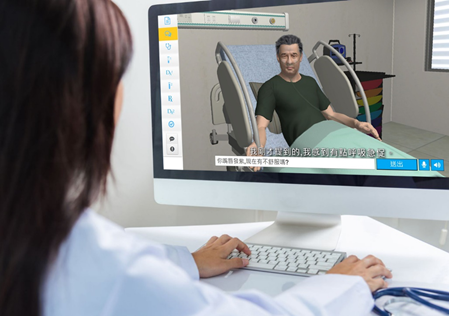
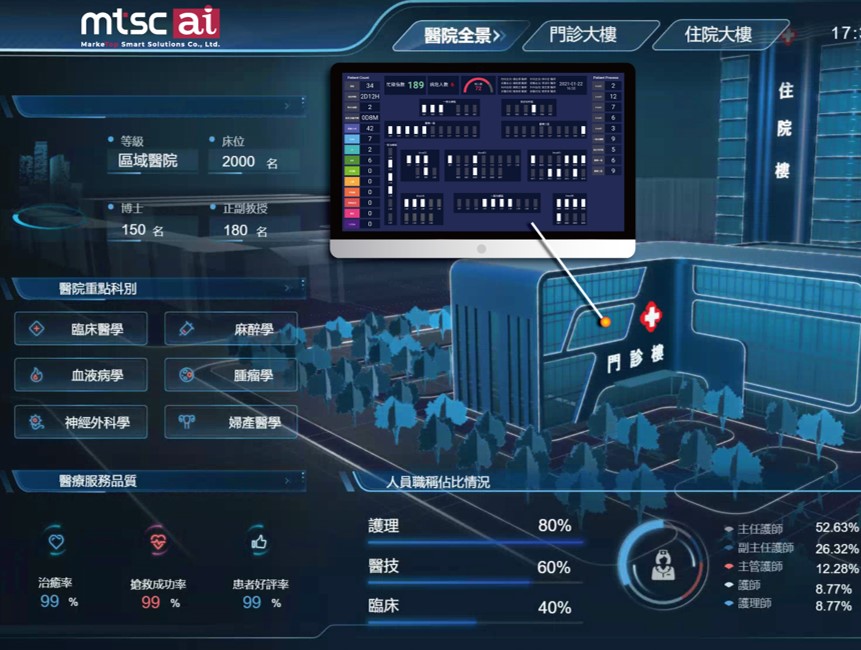
Designed for teaching hospitals and nursing schools, this system combines virtual patients, a virtual hospital environment, and AI-guided interactions to train clinical reasoning and diagnostic skills.
Learners practice in realistic, high-pressure scenarios with real-time feedback and performance tracking to enhance hands-on abilities.
Built on real clinical cases, it features detailed patient data and high-fidelity simulations with voice and text interaction.
Focusing on patient presentations, it provides expert-designed learning goals and feedback to turn virtual practice into real-world readiness.
Features / strengths
■ Enhances diagnostic decision-making by developing clinical reasoning and critical thinking skills.
■ Engages learners through natural language interaction with virtual patients, fostering curiosity and self-directed learning.
■ Simulates realistic medical scenarios to provide immersive, task-based clinical training.
■ Tracks performance and delivers both qualitative and quantitative real-time feedback.
■ Supports cognitive analysis and expert-guided learning for improved outcomes.
■ Includes group discussions and competitions to deepen learning impact.
■ Enables scalable, cost-effective experiential learning compared to in-person training.
■ Offers high-fidelity simulation as a vital supplement when clinical rotation opportunities are limited.
Specification in detail
Case Summary
Consolidates patient demographics and medical history for a quick overview.
History Taking
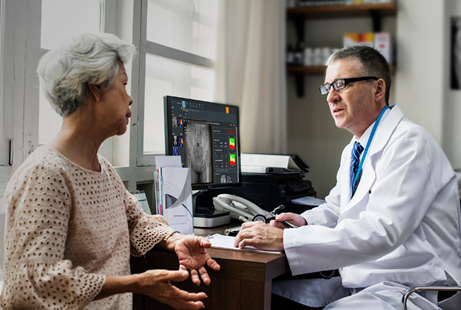
Simulates patient interviews to train natural language-based information gathering.
Vital Signs & Physical Data
Provides clinical observations including vitals and exam results.
Lab Results & Imaging
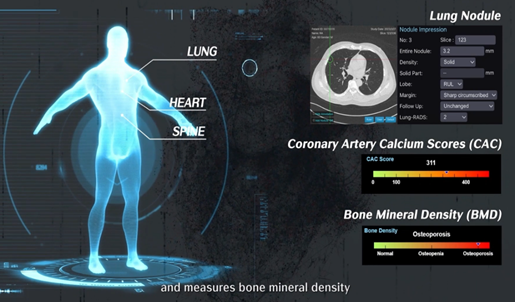
Displays test reports and medical images to support diagnostic reasoning.
Diagnosis
Guides learners through diagnostic thinking based on collected data, with feedback to enhance decision-making.