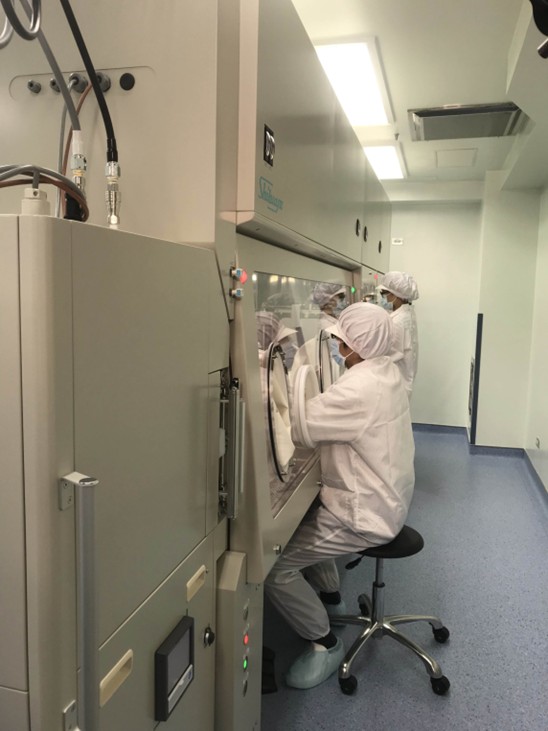
As assisted reproductive technologies continue to advance, the challenge of achieving “fewer transfers, higher success” has become increasingly important in clinical reproductive medicine. In Taiwan, the number of infertility patients seeking assisted reproduction has surged nearly fivefold over the past decade. However, while transferring multiple embryos can increase pregnancy success rates, it also significantly raises the risks of multiple pregnancies and maternal-fetal complications.
Dr. Hong-Yuan Huang, an attending physician at Linkou Chang Gung Memorial Hospital, has led a research team in successfully developing a non-invasive, precision molecular-level embryo selection technology prior to implantation. By analyzing extremely small volumes of embryo culture medium, the team is able to assess developmental potential without affecting embryo viability, providing highly sensitive and accurate molecular insights. This breakthrough ushers in a new era of precision medicine focused on single embryo transfer.
Unlocking the Code of Life from Microdroplets with Seven Core Innovations
The core concept of this technology lies in detecting cytokines and growth factors secreted by embryos during in vitro culture—such as interleukin-1β (IL-1β), tumor necrosis factor-α (TNF-α), and epidermal growth factor (EGF)—which serve as biomarkers for implantation potential. Previously, due to the minuscule sample volume (only 5–10 microliters) and extremely low concentrations (in the picogram per milliliter range), conventional immunoassay instruments struggled to provide effective measurements. Dr. Huang’s team, however, has developed a digital microfluidic immunoassay platform capable of reliably detecting embryonic secretory factors in samples smaller than 1 microliter. This advancement enables truly non-invasive single embryo screening, steering embryo transfer strategies toward “fewer but higher-quality” transfers.
The platform integrates seven key innovations, paving the way for new applications in both reproductive medicine and biomedical diagnostics:
This microfluidic detection chip system has been featured in several Q1 academic journals and holds strong potential for clinical use in infertility treatments. It also shows promise in broader applications such as rare sample testing, early cancer detection, and personalized precision medicine. In particular, given the high technical demands and clinical need for analyzing embryo culture medium in in vitro fertilization (IVF), this technology possesses strong market competitiveness and potential for global patent deployment.
A "One Drop Determines Success" Medical Revolution: Clinical Evidence and Future Vision
Dr. Huang emphasizes that the true value of this technology lies in its ability to extract developmental indicators from what was previously considered “waste” culture medium. The team has already completed multiple preliminary clinical validations, successfully establishing a model correlating embryonic secretions with implantation rates, demonstrating significantly improved predictive accuracy.
Amid Taiwan’s declining birthrate and rising demand for assisted reproduction, Dr. Huang’s team hopes this innovation will make single embryo transfer strategies more viable and safer, reducing maternal burden and easing societal pressures. Looking ahead, the team plans to collaborate with international medical centers and industry partners to commercialize the technology and extend its applications to other rare-sample, high-sensitivity detection scenarios—opening a new era of precision medicine.
Resource: 量測微量培養液評估發育潛能 單一胚胎植入更精準