Faced with the dilemma of being unable to purchase vaccines amid the uncertainty of future emerging infectious diseases globally, what should Taiwan do? Huey-Kang Sytwu, Director of the National Health Research Institutes (NHRI), pointed out that the NHRI possesses the capability for emergency vaccine development and production. After vaccines pass Phase I and Phase II clinical trials, they are then transferred to other vaccine manufacturers in Taiwan for mass production. There is already a successful example, namely the enterovirus 71 (EV71) vaccine, which serves as Taiwan's first independently developed vaccine.
Sytwu stated that in the event of a large-scale epidemic outbreak in the future, with the establishment of the NHRI's Biopharmaceutical Plant II, the NHRI will have emergency vaccine production capacity of at least 500,000 to 1 million doses. Currently, the new vaccine plant is under construction, including personnel training, and research and development of the production process are also underway simultaneously. Additionally, the NHRI is establishing a national infectious disease resource bank (NIDB) to collect various viruses and bacteria causing infectious diseases. In the future, this will become an important national pathogen bank to assist domestic research institutions, medical centers, and biotech companies in developing rapid screening reagents, new drugs, and vaccines.
Sytwu believes that under strict protection of personal privacy and ensuring information security, Taiwan can establish biomedical or related big data databases to record relevant medication information, clinical data, specimens, and genetic analysis data, which will be permanently preserved. This will enable more efficient integration of health-related information for Taiwanese people. In the future, he hopes to combine various national databases, including environmental, climate, air, and water quality data, and use more powerful computers and AI technology to analyze more health issues from different perspectives.
Sytwu stated that obesity and diabetes among Taiwanese people are becoming increasingly serious issues. The NHRI hopes to collaborate with domestic medical institutions to conduct better research and planning for related diseases. In addition, the health issues of the elderly and children in Taiwan have received special attention in recent years. Therefore, the NHRI will focus on elderly and child health issues. For example, four years ago, in collaboration with National Taiwan University, the NHRI established the National Center for Geriatrics Medicine and Health Welfare Research in Yunlin. Since Yunlin has a relatively severe aging population and a lack of medical resources, the research center's hardware is nearing completion and will focus on research on dementia, neurodegenerative diseases, osteoporosis, muscular dystrophy, and polypharmacy. It is currently recruiting experts in geriatric medicine and care and will simultaneously promote technology related to elderly health, such as wearable devices and companion robots. In terms of child health, the NHRI is also assisting the Ministry of Health and Welfare in promoting specialized regional care networks to further improve the quality of child health care.
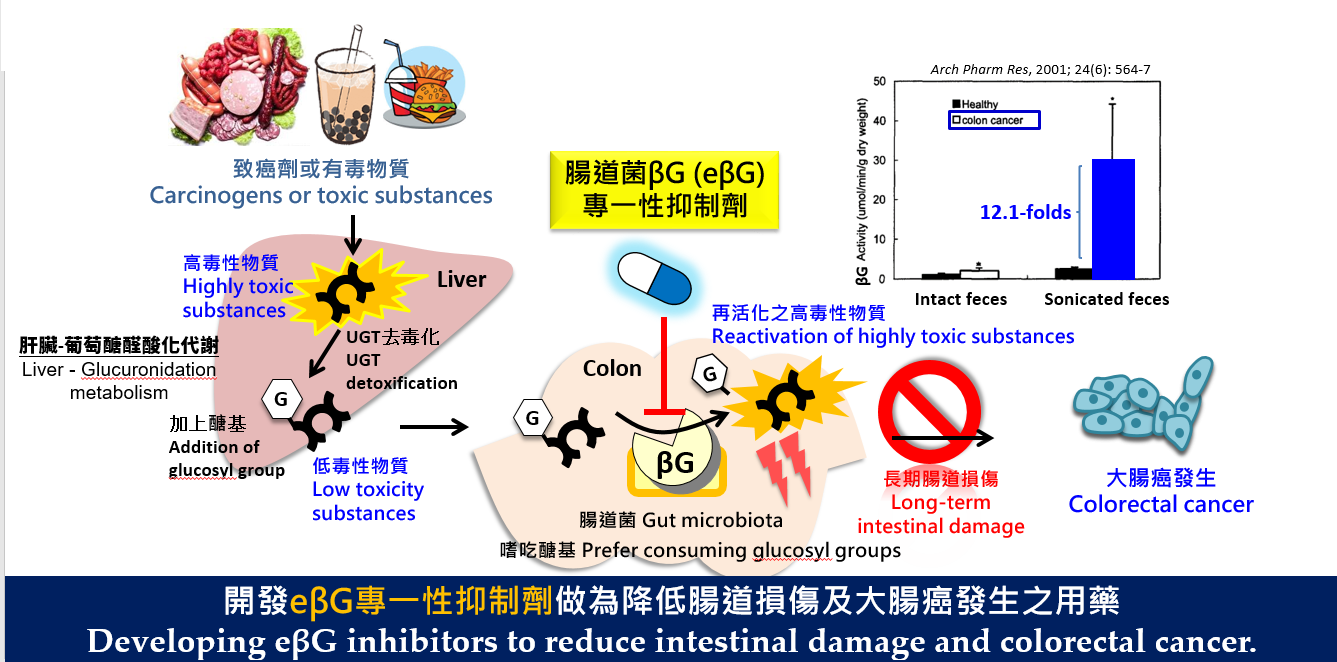
As a leader in Taiwan's health research, Sytwu believes that the NHRI can play an extremely important role in the field of biotechnology. The three major missions of the NHRI are basic research, health policy, and biotechnology. He explained that basic research involves biomedical research on genes, molecules, cells, etc. Health policy includes formulating macro policies based on evidence-based methods, conducting evaluation analysis, and establishing a rolling adjustment mechanism, while also conducting cancer research and new drug development. In terms of the biotechnology industry, the NHRI has established biotechnology and new drug development institutes in the past. Over the past twenty years, the NHRI has successively conducted research and development on major diseases, infectious diseases, drugs, vaccines, and biomedical materials for the Taiwanese people. Currently, the construction of Biopharmaceutical Plant II is underway. The NHRI aims to "enhance the health and well-being of the Taiwanese people" as its ultimate goal. Sytwu looks forward to maximizing the energy of the 1,600 employees within the institute by closely integrating their efforts to achieve a more intensive connection among the NHRI's three major missions, aiming for a goal where "1 + 1 + 1 > 5."
Regarding the future development of the NHRI, Sytwu hopes that the government and society can provide more support and resources, and he particularly looks forward to attracting outstanding talents in Taiwan to join the NHRI and receive top-notch training in health research. Sytwu believes that outstanding health research talents must have good character, rigorous scientific research spirit, and must also be compassionate, honest, and upright individuals. He hopes that partners who join the NHRI can share his vision of striving to improve the health and well-being of the Taiwanese people together.